
How Investment Deal Crisis Put Regulator’s Oversight Under Scrutiny
August 31, (THEWILL) — The revelation of Geregu Power Plc default on its bond obligations shocked Nigerians when it became public in late July 2026. Consequently, the FMDQ Securities Exchange — the market infrastructure provider — identified Geregu’s N409.09 billion senior unsecured bond as being in “credit default” early August. This followed the utility firm’s failure to make its eighth semi-annual coupon payment and the fourth scheduled principal installment.
The N40.9 billion bond, which represents the largest corporate bond ever issued by a power generating company in the history of Nigeria’s power sector, experienced oversubscription.

The Deal, Stunning Revelation

In July 2022, Geregu Power Plc issued a N40.09 billion bond under its former majority owner and chairman, Femi Otedola, and former CEO, Akin Akinfemiwa. The bond proceeds were originally raised to acquire an additional power plant (Geregu II). However, the deal collapsed after the company could not satisfy the Bureau of Public Enterprises (BPE) requirements.
Because the acquisition failed, the unused proceeds—amounting to roughly N31 billion—were supposed to be ring-fenced in an interest-yielding escrow account to strictly service the bond payments.
In December 2025, Femi Otedola sold his majority stake in Geregu, via Amperion Power, to MA’AM Energy Limited for approximately $750 million. MA’AM Energy Limited – a vehicle linked to Abdulaziz Yari, former Zamfara state governor, became the new majority owner.
Legal and financial reviewers, including Segun Suleiman & Co., alleged that during the transfer of ownership, documentation indicated the escrow funds were intact. However, when the new board, under MA’AM, took control, they discovered the N31 billion in restricted cash had already been utilized or withdrawn by the previous management under Otedola.
Due to the missing funds, the company skipped its July 28, 2026, payment deadline. Rating agencies like Agusto & Co. promptly withdrew their ratings, demanding an independent forensic audit of the books.
Faruk Yusuf, the Managing Partner of Segun Suleiman & Co., publicly analysed the financial situation on ARISE News Channel on August 14, explaining that the default was a specific N6.03 billion coupon and principal obligation rather than the entire N40 billion bond. He also shared findings from a review of the company’s books regarding the status of bond proceeds and escrow accounts tied to previous management.
How the Bond Obligation was Settled
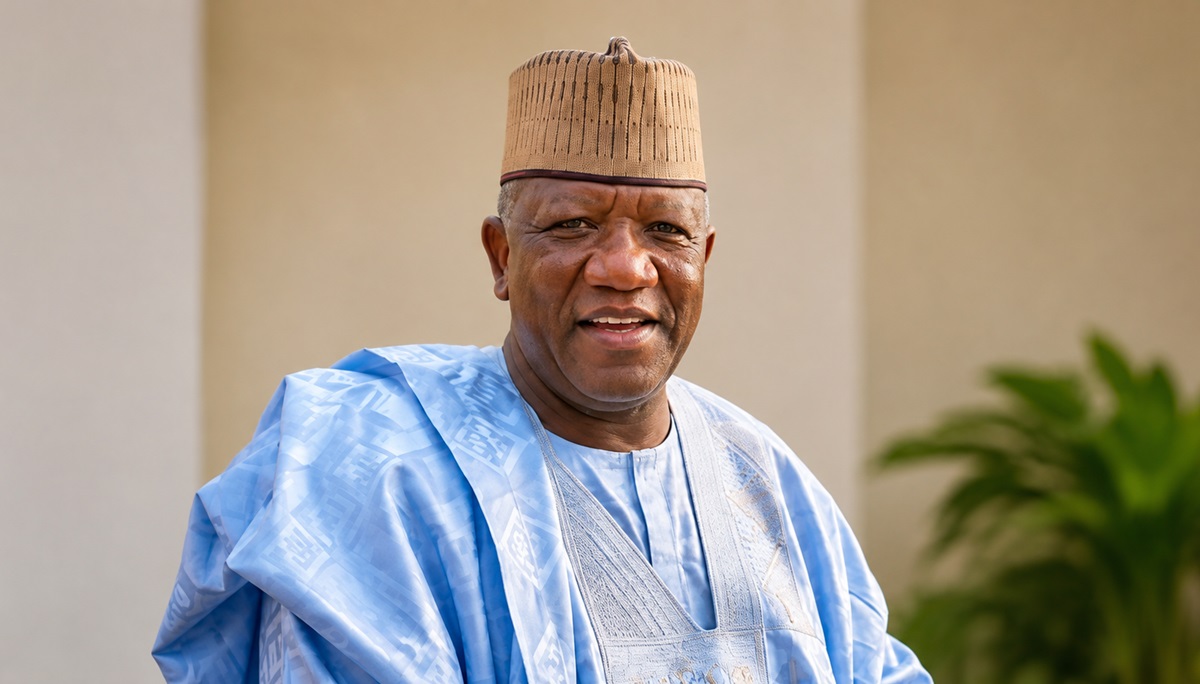
To protect investor confidence and stop a broader capital market panic, the newly appointed Board Chairman, Senator Abdulaziz Yari, personally stepped in. He provided the N6 billion out-of-pocket to pay off the bondholders immediately.
The new Chairman, Senator Yari, explicitly emphasised in a statement that the personal payment was done solely to protect the company’s integrity. He stressed that it is not an admission of personal liability or a sign that the current board created the problem. The current management maintains that the former owners remain fully responsible for the unaccounted escrow funds.
Where was the SEC?

As the controversy deepens, a particular question is becoming increasingly difficult to avoid: Where was the Securities and Exchange Commission (SEC)?
Geregu’s default is more than a corporate debt problem. It is potentially a major test of the effectiveness of Nigeria’s investor-protection architecture.
The default has since become more controversial because of questions surrounding the utilisation and custody of the bond proceeds, the said existence of restricted or escrowed funds and the circumstances under which a company that reportedly had substantial cash and restricted balances could miss a scheduled debt-service obligation.
“Bond obligation is sacrosanct. To fail in bond obligation is like committing a religious sacrilege. It must never be imagined at all because of the attendance consequence which is not only far-reaching but terrible,” said Mike Aknnor, a financial analyst.
Akannor explained, “That is where the SEC’s role comes under scrutiny. The Commission did not borrow the money. It did not manage Geregu. It did not approve the company’s expenditure. And legally, the primary responsibility for paying bondholders rests squarely on the issuer under the terms of the bond and trust deed.”
But SEC was not a mere spectator either. It was the statutory gatekeeper of the capital market. And the question investors now ask is whether Nigeria’s capital-market regulator merely approved the transaction at inception—or whether it adequately monitored what happened to investors’ money after the bond was issued.
Approval not end of Regulation
Industry experts emphasise that the distinction is critical. A securities regulator cannot guarantee that every investment will succeed. Bond investing involves risk, and no regulator can prevent every corporate default. But the SEC’s responsibility goes beyond stamping an approval on an offer document.
Under SEC rules, an issuer is prohibited from using proceeds of an issue for purposes other than those stated in the offer document without the Commission’s prior approval. The rules also require detailed information on the utilisation of proceeds to be filed with SEC, with evidence of utilisation, and provide for quarterly reporting until the proceeds are fully utilised.
The regulatory framework also provides for continuous reporting involving the issuer, sponsor and trustee, including quarterly reports on utilisation of proceeds, annual audited financial statements and periodic rating information. These provisions raise a fundamental question in the Geregu saga:
Did SEC receive the required reports on the utilisation of the N40.09 billion raised from investors, and if so, what did those reports show? If the proceeds were used exactly as represented to investors, SEC should be able to establish that from the reports filed with it.
If the original purpose of the bond changed, the market deserves to know whether the Commission granted the required approval. And if the proceeds were not deployed as originally envisaged and were instead retained in restricted or escrow arrangements, investors deserve clarity on who monitored those funds, under what conditions they could be accessed and how those arrangements changed over time. This is not a peripheral issue. It goes to the heart of regulatory oversight.
READ ALSO:
SEC, Stakeholders’ Reactions
When approached for comments on Tuesday, August 25, Mrs. Efe Ebelo, the Head of Corporate Communications at the SEC, said she will revert. However, as of the filing of this report on Sunday (August 30), she had not responded, even after a reminder was sent on Thursday. This disposition reinforces investors’ worries regarding the SEC’s involvement in the contentious Geregu bond deal, which has brought embarrassment to Nigeria’s capital market.
Stakeholders and industry experts have also provided their insights on the development, which some view as contrary to the image and progress of Nigeria’s capital market.
Dr Anthony Omojola, CEO at Credible Associates Limited, emphasised that it is incumbent on the SEC to monitor the deal from the inception to the end as the investing public relies on its role as the watchdog of the capital market. He said the SEC should not wait till a deal becomes problematic before taking the necessary action.
Omojola, who is also a management and investment consultant, noted that the personalities involved and the timing of the ownership change makes it imperative for the SEC to pay closer attention to the bond deal, to ensure that investors’ assets are fully protected.
“There should be a unit of the Commission that monitors the performance of such company with a view to ensuring due process in implementing the terms of the bond. They do not have to wait until default happens,” Omojola said in a note to THEWILL.
Also, reacting to the development, Dr Paul Uzum, executive director at Halo Capital Management Limited, said the controversy is not strange in a system like Nigeria’s. He sympathised with the SEC because of the parties involved. “On the part of SEC there are limitations to what they can do in a country like Nigeria, especially when the parties involved are very influential people with strong political backing”, he said.
Victor Ukutt, a solicitor knowledgeable in Nigeria’s financial services sector, remarked that the SEC likely chose to exercise caution due to the specifics of the transaction. He voiced apprehension regarding the potential harm to Nigeria’s capital market reputation stemming from this situation.
Another investment specialist, Sam Ndata, chief operating officer at Fundvine Capitals and Securities, Lagos, believes the SEC and the Exchange Group must have worked silently behind the scene to resolve the matter. “Thankfully. the amount due has been settled as expected.”
Why the Default Matters
Although the bond-holders have been fully paid by the new management, Geregu’s bond default is more than a corporate embarrassment; it is a troubling test of the integrity of Nigeria’s capital market and the regulatory safeguards meant to protect investors.
The crisis is particularly unsettling because it involves a listed, highly visible power company that raised billions of naira from investors on the strength of representations that the funds would be deployed for specified purposes. Surprisingly, the firm found itself unable to meet obligations that should have been anticipated and ring-fenced.
Secondly, the bond drew the interest of reputable institutional investors who recognised the essential role of power in Nigeria’s economic development goals – an area that has faced challenges for many years and has contributed to the failure in the country’s industrialisation efforts. Again, the investors aligned with the Nigerian government’s efforts to boost both foreign and local investors’ interest in the economy.
At the heart of the unfolding controversy are disturbing questions: How did a company with access to substantial investor funds, regulatory oversight and a publicly traded profile end up in default—and where were the gatekeepers while the warning signs were building? Was the SEC taken unawares or simply overwhelmed?
Sam Diala is a Bloomberg Certified Financial Journalist with over a decade of experience in reporting Business and Economy. He is Business Editor at THEWILL Newspaper, and believes that work, not wishes, creates wealth.
