
-
King Harald V of Norway, Europe’s oldest reigning monarch, has died at 89, bringing to an end a 35-year reign marked by efforts to modernise the Norwegian monarchy while preserving its traditional role as a symbol of national unity.
-
The Royal Palace said Harald died at 6:35 a.m. on Friday at the National Hospital in Oslo. His death automatically places his son, Crown Prince Haakon, on the Norwegian throne as King Haakon VIII, in accordance with Norway’s constitutional succession.
-
Harald remained committed to the throne despite repeated health challenges and refused to abdicate, insisting that the oath he took upon becoming king was a lifelong commitment. He was hospitalised several times in his final years and was fitted with a pacemaker in 2024.
-
His life was shaped by war, royal duty and a willingness to challenge tradition. He spent part of his childhood in exile in the United States during Nazi Germany’s occupation of Norway, later married his commoner school sweetheart, Sonja Haraldsen, and became known for his outspoken support for democracy, diversity, LGBTQ+ rights and religious tolerance.
August 28, (THEWILL) — King Harald V of Norway, Europe’s oldest monarch, has died at the age of 89.
THEWILL reports that the Royal Palace announced on Friday that the king died at 6:35 a.m. at the National Hospital in Oslo, where he had been receiving medical treatment.
His death marks the end of a 35-year reign and ushers Norway into a new royal era, with his son, Crown Prince Haakon, automatically succeeding him as King Haakon VIII.

Harald ascended the throne on January 21, 1991, following the death of his father, King Olav V. He retained the royal motto used by both his father and grandfather: “All for Norway.”
During his reign, Harald worked to modernise the monarchy and strengthen its relevance in contemporary Norwegian society. Although Norway’s monarch has largely ceremonial and representative responsibilities, the royal family remains an important symbol of national identity in the Scandinavian country of about 5.5 million people.
Political authority rests with the elected parliament and government, while the king performs constitutional, diplomatic and ceremonial duties.
Harald became particularly respected for his ability to project a sense of national unity during periods of crisis.
Following the 2011 attacks by far-right extremist Anders Behring Breivik, who killed 77 people in bomb and gun attacks, Harald delivered an emotional speech in which he defended freedom, democracy and Norway’s open society.
“I remain convinced that the belief in freedom is stronger than fear”, he said, expressing confidence in the country’s ability to remain free and secure despite the attacks.
The king also made international headlines in 2016 when he delivered a passionate speech in support of LGBTQ+ equality, refugees and religious tolerance.
“Norwegians are girls who love girls, boys who love boys, and girls and boys who love each other”, Harald said, stressing that Norway was home to people from different countries, faiths and backgrounds.
The speech was widely circulated on social media and reinforced his image as a monarch prepared to address contemporary social issues.
Childhood Marked By War
Harald was born in 1937 in Asker, near Oslo, becoming the first Norwegian prince to be born in the country in centuries.
His grandfather, Haakon VII, had become king following Norway’s dissolution of its union with Sweden in 1905. Harald was only three years old when Nazi Germany invaded and occupied Norway during World War II.
To protect the royal family from capture, his mother, Crown Princess Märtha, fled Norway with Harald and his sisters, Ragnhild and Astrid. They travelled first to Sweden and later sailed to the United States.
Harald’s father and grandfather went into exile in Britain alongside the Norwegian government.
During his time in the United States, the young prince and his family were welcomed at the White House on several occasions. At the age of six, Harald performed his first official duty by christening new warplanes at a Norwegian air base in Canada.
The family returned to Norway in June 1945, shortly after the end of the war.
Harald later attended public schools in Norway, the Norwegian Military College and Oxford University.
READ ALSO:
Defied Royal Marriage Tradition
As a young crown prince, Harald was expected to marry a European princess in keeping with royal tradition. Instead, he remained committed to his school sweetheart, Sonja Haraldsen, the daughter of a successful businessman.
For nine years, Harald resisted pressure to select a bride from Europe’s royal families. His father, King Olav, initially feared that a marriage to a commoner could undermine Norway’s relatively young monarchy.
Olav eventually gave his approval, paving the way for Harald and Sonja to marry on August 29, 1968.
The marriage was greeted with widespread public jubilation, and Sonja later became Queen of Norway.
The couple had two children, Crown Prince Haakon and Princess Märtha Louise.
Norway amended its Constitution in 1990 to give the first-born child precedence in the line of succession regardless of gender. However, the amendment was not retroactive, meaning Haakon remained ahead of his older sister in the succession.
A Monarch Who Refused To Abdicate
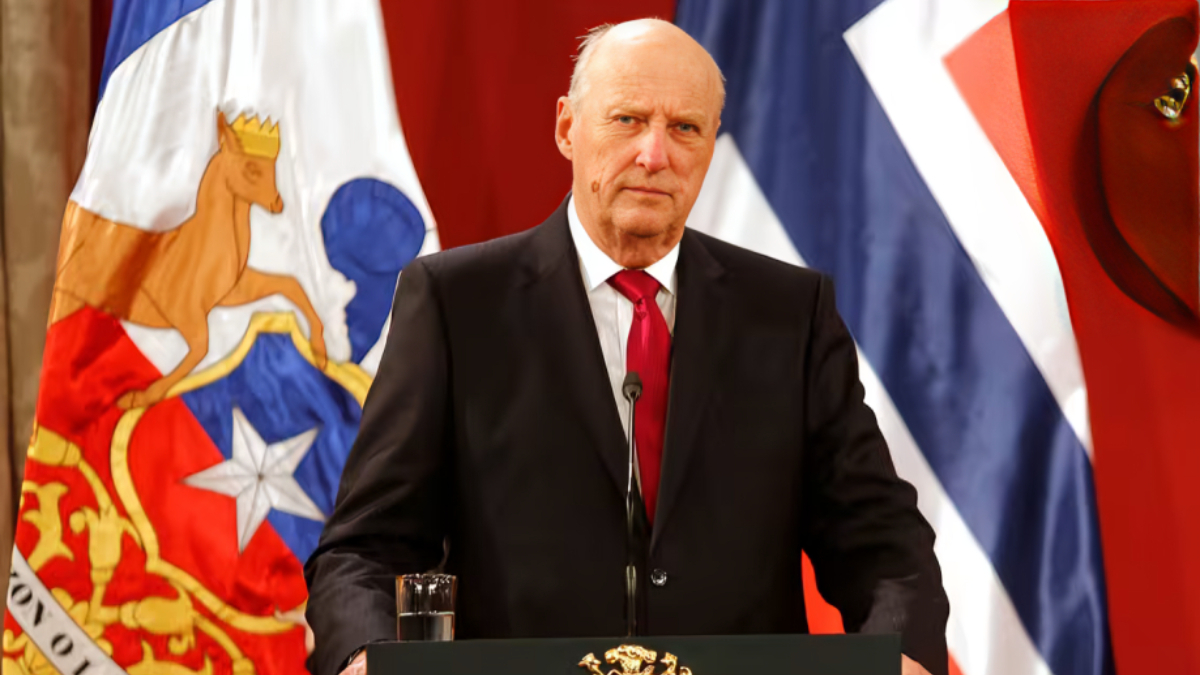
Harald’s commitment to the throne remained firm even as his health deteriorated in his later years. He was hospitalised several times, including while travelling abroad. In 2024, he was fitted with a pacemaker after falling ill during a holiday in Malaysia.
He was hospitalised again in February 2026 while on holiday on the Spanish island of Tenerife after suffering a skin infection.
Despite his health challenges, Harald refused to follow the example of several European monarchs who have abdicated in favour of younger heirs.
After Denmark’s Queen Margrethe II, his second cousin, abdicated in January 2024, Harald reiterated his commitment to remaining on the throne.
“I stand by the oath I made when I became king. It lasts for life”, he said.
That position ensured that Harald remained Europe’s oldest reigning monarch until his death.
Felix Ifijeh is a journalist with years of professional reporting experience. Known for his keen news sense, compelling storytelling and commitment to accurate, impactful reporting, he has built a reputation for turning leads into clear, engaging, and well-structured reports that resonate with readers. His work reflects deep newsroom experience and a commitment to accurate, impactful journalism.