
-
WHO says countries should not impose travel or trade restrictions on nations affected by the Ebola Bundibugyo outbreak, despite its continuing cross-border spread.
-
Nigeria has become the fifth country to detect the virus in the current outbreak after confirming an imported case involving a woman who recently travelled from Uganda to Abuja.
-
Health authorities have identified 44 contacts for monitoring and intensified efforts to find other people who may have been exposed to the infected patient.
-
WHO has urged countries to strengthen surveillance at points of entry, laboratory testing and infection-control measures as the outbreak in the Democratic Republic of the Congo continues to evolve.
October 21, (THEWILL) – The World Health Organisation (WHO) has advised countries against imposing travel or trade restrictions on nations affected by the Ebola Bundibugyo virus disease outbreak, even as Nigerian health authorities monitor 44 contacts following confirmation of an imported case in Abuja.
Nigeria confirmed the case in the Federal Capital Territory (FCT) on Tuesday, becoming the fifth country to detect the virus since the outbreak was declared in the Democratic Republic of the Congo (DRC) on May 15, 2026.
WHO, in a statement on Tuesday, said it was closely monitoring developments and would continue to reassess the risks associated with the outbreak as the situation evolves.

“WHO advises against any restriction of travel to, or trade with, affected countries”, the organisation said.
It added that it would continue to monitor and, where necessary, verify travel and trade measures introduced in response to the outbreak.
According to the Federal Ministry of Health and Social Welfare, Nigeria’s confirmed patient is a woman with a recent travel history to Uganda.
The woman developed symptoms on October 7, four days after arriving in Nigeria, and sought medical attention at a private health facility in Abuja on October 11.
Laboratory testing confirmed Bundibugyo virus disease on October 20. The patient has since been placed in isolation and is receiving medical care.
Health authorities are investigating the likely source of the infection and reconstructing the patient’s travel and exposure history to establish how she contracted the virus and identify other people who may have been exposed.
The ministry said 44 contacts had so far been identified and were being monitored, while efforts had been intensified to locate other possible contacts.
Infection prevention and control measures have also been strengthened at the private health facility where the woman initially sought treatment.
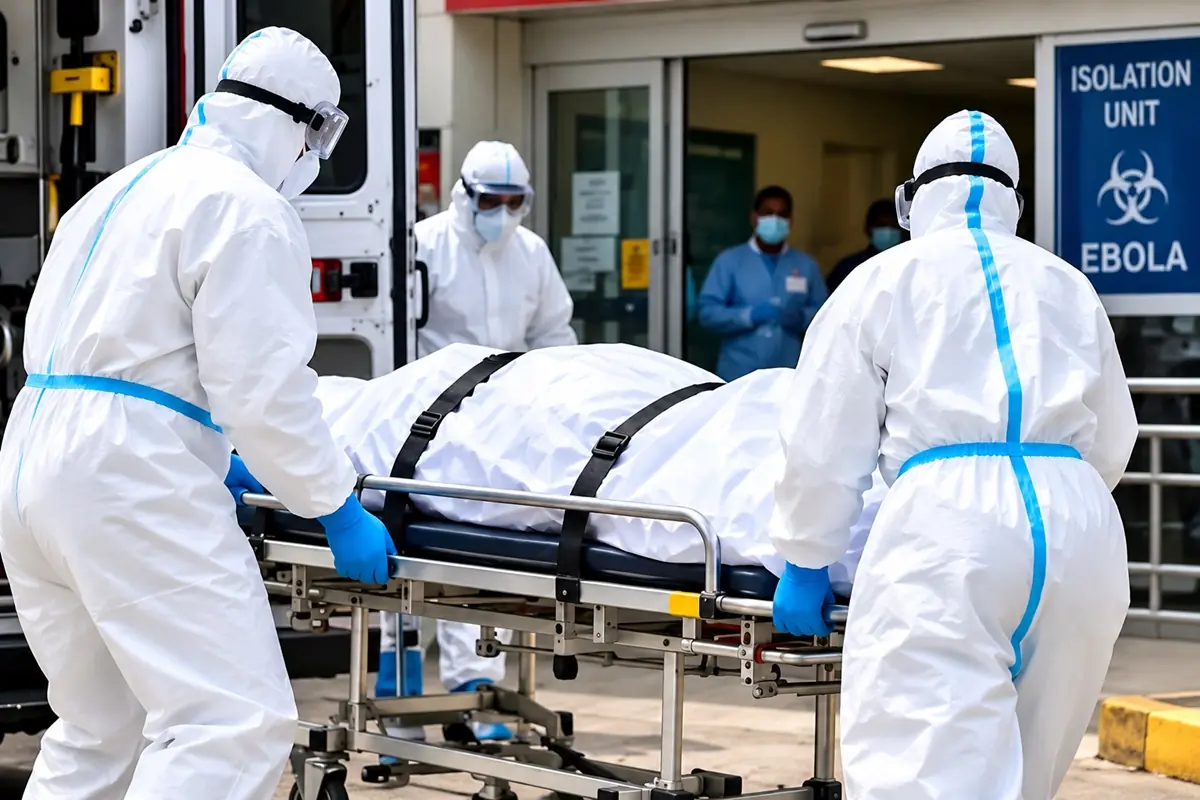
The Nigeria Centre for Disease Control and Prevention (NCDC) has activated its incident management system to coordinate the response, with emphasis on case detection, contact tracing and infection prevention and control.
WHO and its partners are also working with Nigerian health authorities to strengthen case investigation and contact tracing and provide essential supplies, including personal protective equipment for health workers.
The global health body urged countries in the region to maintain a high level of preparedness as the outbreak in the DRC continues to evolve.
READ ALSO:
According to WHO, Kenya has reported nine cases linked to an imported infection in recent weeks. Kenya first notified WHO of an imported Bundibugyo virus disease case on October 6.
WHO urged countries to maintain strong disease surveillance and ensure that suspected cases are rapidly investigated, while laboratories should be equipped to safely test samples from suspected patients. It also called for rapid-response and clinical teams to be kept ready for immediate deployment and for infection prevention and control measures to be reinforced in both public and private health facilities.
Countries were further advised to pre-position essential supplies, strengthen community engagement and heighten monitoring at airports, land borders and other points of entry.
WHO said sustained preparedness remained crucial to detecting infections early, preventing further transmission and protecting health workers and communities.
Background
The current outbreak began in north-eastern DRC, where laboratory analysis by the country’s National Institute of Biomedical Research confirmed Bundibugyo virus in eight of 13 samples collected from suspected cases associated with clusters of severe illness and deaths in the Mongbwalu and Rwampara health zones of Ituri Province.
DRC formally declared the outbreak on May 15, making it the country’s 17th recorded Ebola outbreak since the virus was first identified in 1976.
Uganda also confirmed imported cases from the DRC at the beginning of the outbreak. WHO subsequently determined that the Ebola outbreak caused by Bundibugyo virus constituted a Public Health Emergency of International Concern, requiring coordinated international action.
The outbreak has since expanded substantially. By August 12, WHO had recorded 4,665 confirmed cases and 2,184 deaths among confirmed cases in the DRC.
Uganda had recorded 20 confirmed cases as of July 14, including imported infections and secondary cases among contacts and health workers. WHO said no community transmission had been detected in Uganda at the time.
The outbreak later reached Kenya, which confirmed its first imported case in early October, before Nigeria became the fifth country to detect the virus in the current outbreak.
Bundibugyo virus disease is a severe form of Ebola disease that can spread between people through direct contact with bodily fluids or contaminated materials.
Unlike Ebola disease caused by some other virus species, there is currently no approved vaccine or specific treatment for Bundibugyo virus disease, although candidate vaccines and treatments are being evaluated.
Despite the cross-border spread, WHO has maintained that travel and trade restrictions should not be imposed on affected countries, while urging governments to strengthen surveillance, preparedness and rapid-response measures to prevent further transmission.
Felix Ifijeh is a journalist with years of professional reporting experience. Known for his keen news sense, compelling storytelling and commitment to accurate, impactful reporting, he has built a reputation for turning leads into clear, engaging, and well-structured reports that resonate with readers. His work reflects deep newsroom experience and a commitment to accurate, impactful journalism.
