
-
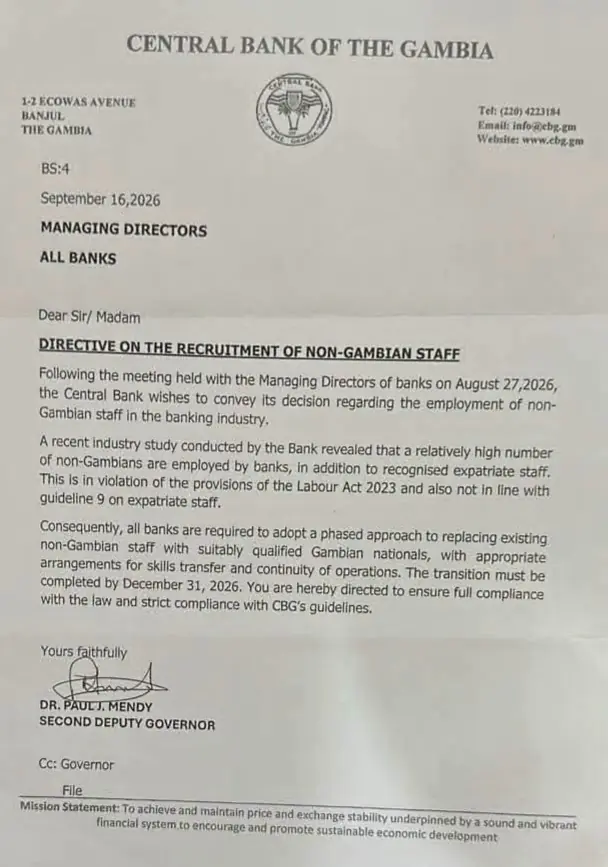
The Central Bank of The Gambia has directed banks operating in the country to replace non-Gambian employees with qualified Gambian nationals by December 31, 2026.
-
NiDCOM says 57 Nigerian professionals working in four Nigerian-origin banks could lose their jobs despite reportedly holding valid residency and work permits.
-
The affected banks account for 37.2 percent of total banking deposits, 32.6 percent of loans and 37 percent of industry assets in The Gambia.
-
NiDCOM has demanded an immediate reversal of the directive, urging the Gambian authorities to engage Nigeria diplomatically to resolve the dispute.
November 3, (THEWILL) – The Nigerians in Diaspora Commission (NiDCOM) has protested a directive by the Central Bank of The Gambia ordering banks operating in the country to replace non-Gambian employees with qualified Gambian nationals by December 31, 2026, warning that 57 Nigerian professionals could lose their jobs.
The Commission’s Chairman and Chief Executive Officer, Abike Dabiri-Erewa, described the directive as deeply worrisome, noting that its implementation could affect Nigerian professionals employed by four Nigerian-origin banks operating in the West African country.
In a statement signed on Tuesday by NiDCOM’s Head of Media, Public Relations and Protocols, Abdur-Rahman Balogun, the Commission said the affected Nigerians possess valid residency and work permits and have made significant contributions to the Gambian banking sector.

The directive, issued on September 16, 2026, requires banks to replace their existing non-Gambian employees with qualified Gambian nationals before the end of the year.
While acknowledging The Gambia’s sovereign right to promote local employment and develop its workforce, Dabiri-Erewa maintained that such policies should respect existing employment arrangements, valid work authorisations and the principles of African solidarity and regional integration.
She expressed concern over the potential displacement of Nigerian professionals who had secured lawful employment and contributed to the development of the Gambian financial sector.
Affected Banks Account For 37.2% Of Deposits
NiDCOM also highlighted the economic contributions of the four Nigerian-origin banks potentially affected by the directive, pointing to their substantial presence in The Gambia’s financial system.
According to the Commission, the banks collectively account for approximately 37.2 percent of total banking industry deposits, valued at 35.3 billion Gambian dalasis.
They also account for 32.6 percent of loans worth 7.67 billion dalasis and 37 percent of the industry’s total assets, valued at 44.78 billion dalasis.
NiDCOM further disclosed that the four institutions account for approximately 34.5 percent of investments in Central Bank bonds and reportedly provide 90 percent of the funding supporting the operations of the National Water and Electricity Company (NAWEC).
The Commission said the figures reflected the significant contributions of the Nigerian-origin banks to the Gambian economy and underscored the importance of the institutions to the country’s financial sector.
READ ALSO:
NiDCOM Demands Immediate Reversal
The Commission faulted the blanket replacement directive, arguing that policies capable of displacing qualified African professionals contradict efforts to promote investment, economic cooperation and the free movement of people across the continent.
It maintained that the promotion of African investment and regional economic integration should go hand in hand with respect for legitimate employment arrangements and the rights of professionals working across national borders.
NiDCOM consequently called on the Central Bank of The Gambia to immediately reconsider and reverse the directive.
It also urged the Gambian authorities to engage the Nigerian High Commission in Banjul, the affected financial institutions and other relevant stakeholders to reach an equitable resolution.
The Commission further called for respect for the spirit of the Economic Community of West African States (ECOWAS) integration framework and the longstanding cordial relationship between Nigeria and The Gambia.
It advocated constructive diplomatic engagement between both countries to resolve the dispute and prevent the displacement of the affected Nigerian professionals.
Background
Nigeria and The Gambia are members of ECOWAS, a regional organisation established to promote economic cooperation, integration and the free movement of persons, goods and services among member states.
The ECOWAS framework provides for the entry, residence and establishment of citizens of member countries in other member states, subject to applicable protocols and national regulations.
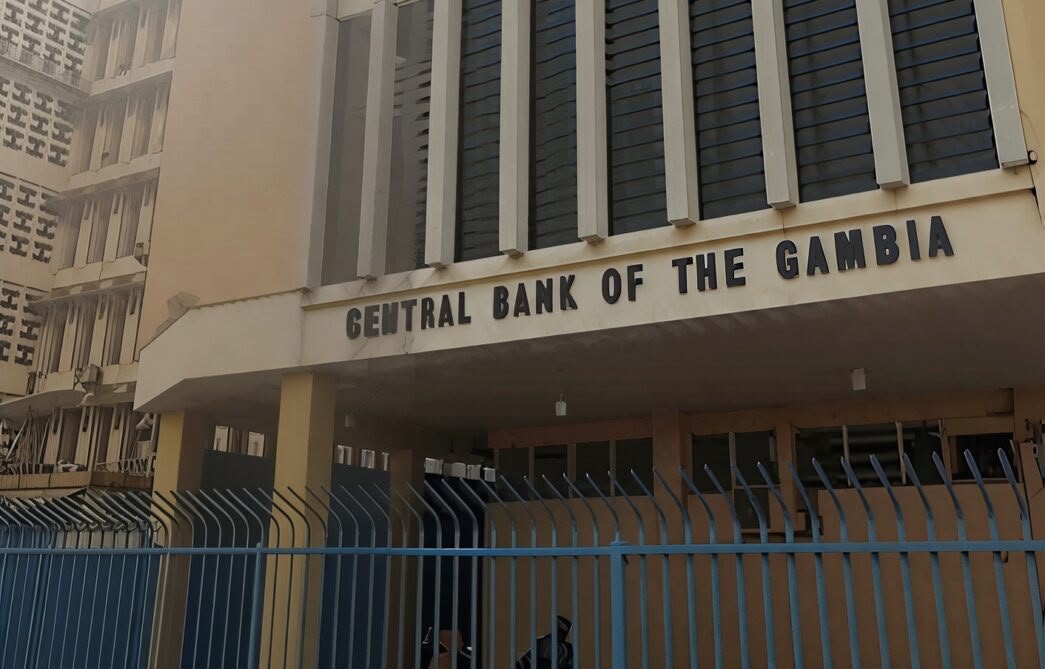
The latest dispute centres on the Gambian Central Bank’s September 16, 2026 directive requiring banks to replace non-Gambian employees with qualified Gambian nationals by December 31, 2026.
NiDCOM says 57 Nigerian professionals working in four Nigerian-origin banks stand to be affected by the directive, prompting its call for reconsideration and diplomatic intervention.

Felix Ifijeh is a journalist with years of professional reporting experience. Known for his keen news sense, compelling storytelling and commitment to accurate, impactful reporting, he has built a reputation for turning leads into clear, engaging, and well-structured reports that resonate with readers. His work reflects deep newsroom experience and a commitment to accurate, impactful journalism.
