
-
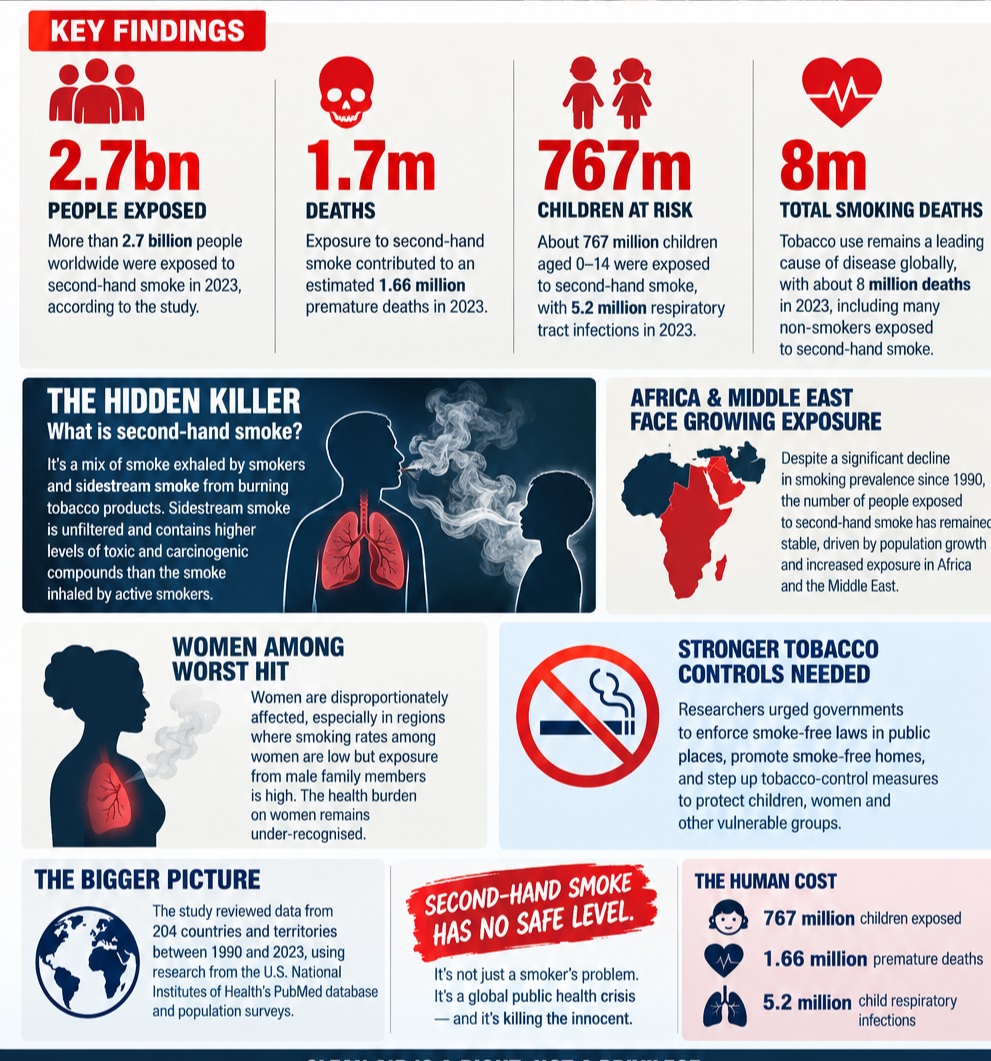
More than 2.7 billion people were exposed to second-hand smoke globally in 2023, with the exposure contributing to an estimated 1.7 million premature deaths, according to a new study published in The Lancet.
-
Of those exposed, about 767 million were children aged 0–14. Researchers estimated that second-hand smoke exposure caused 5.2 million respiratory tract infections among children in 2023, highlighting the vulnerability of those who have no control over their smoking environment.
-
Despite a substantial decline in smoking prevalence since 1990, the absolute number of people exposed to second-hand smoke has remained broadly stable, driven in part by population growth and increased exposure across Africa and the Middle East.
-
The study found that women are particularly vulnerable in societies where female smoking rates are low but exposure to smoke from other household members remains widespread, prompting researchers to demand stronger smoke-free protections in homes and public spaces.
September 08, (THEWILL) — More than 2.7 billion people globally, including 767 million children, were exposed to second-hand tobacco smoke in 2023, contributing to an estimated 1.7 million premature deaths, according to a major study published in The Lancet.
The study described second-hand smoke exposure as a major global health threat, warning that there is no safe level of inhalation and that millions of people who do not smoke are nevertheless paying a deadly price for tobacco use.
The researchers estimated that second-hand smoke was responsible for nearly 1.7 million premature deaths in 2023, while contributing to substantial disability and illness worldwide.

The findings form part of the broader global tobacco burden, with smoking-related illnesses estimated to have caused about eight million deaths in 2023.
The researchers conducted a comprehensive review of studies indexed in the United States National Institutes of Health’s PubMed database, as well as population surveys, to estimate the prevalence of second-hand smoke exposure and its health consequences across 204 countries and territories between 1990 and 2023.
According to the findings, approximately 2.7 billion people were exposed to second-hand smoke in 2023. Children accounted for a particularly disturbing proportion of those exposed, with about 767 million children between zero and 14 years affected.
The researchers estimated that exposure to second-hand smoke caused 5.2 million respiratory tract infections among children in 2023.
Beyond childhood respiratory illnesses, the study linked second-hand smoke exposure to a broad range of serious health consequences. Ischaemic heart disease, a condition in which inadequate blood supply reaches the heart muscle, was identified as the leading contributor to the disease burden associated with exposure.
Smoke Victims Who Never Lit a Cigarette
The study underscores the fact that tobacco’s health consequences extend far beyond people who actively smoke.
Non-smokers can be exposed when they live with smokers, work in environments where smoking occurs or spend time in places where tobacco products are being used.
Researchers explained that people exposed to second-hand smoke inhale both smoke exhaled by smokers and sidestream smoke, which comes directly from the burning tobacco product.
According to the study, sidestream smoke can dominate the air inhaled by people around a smoker and is unfiltered, carrying high concentrations of toxic and carcinogenic substances. This means that people who never voluntarily consume tobacco can nevertheless inhale a mixture of dangerous chemicals simply because they are near someone who smokes.
The researchers warned that this makes second-hand smoke an important public health issue rather than merely a matter of individual lifestyle choice.
Global Decline in Smoking Fails to End Exposure
The findings also reveal a troubling contradiction in the global tobacco fight.
While smoking prevalence has declined significantly since 1990, the absolute number of people exposed to second-hand smoke has remained relatively stable.
Researchers attributed this partly to population growth and increased exposure in parts of Africa and the Middle East.
The development means that reductions in the proportion of people who smoke have not automatically translated into a corresponding reduction in the number of people exposed to tobacco smoke.
For public health authorities, the researchers said, the finding highlights the need to move beyond efforts aimed solely at smokers and introduce stronger measures to protect people who do not smoke.
Women Among Worst Hit
Women were identified as another group disproportionately affected by second-hand smoke.
The study noted that women can face particularly high levels of exposure in regions where smoking prevalence among women is relatively low.
In such settings, women may nevertheless be exposed to tobacco smoke from male family members, particularly within households.
The researchers argued that the health burden of second-hand smoke among women remains insufficiently recognised despite its potential contribution to serious diseases.
They warned that women who do not smoke may still face substantial health risks simply because they live or work around smokers.
The study therefore called for stronger recognition of second-hand smoke exposure as a significant risk factor for women’s health.
Call for Stronger Tobacco Controls
The researchers urged governments to intensify tobacco-control measures and strengthen protections against second-hand smoke.
They specifically called for stronger restrictions on smoking in public places and greater efforts to encourage smoke-free homes, particularly to protect children and other vulnerable household members.
Such measures, they argued, would help reduce involuntary exposure among people who have little or no control over the environments in which they live.
The findings also reinforce the importance of comprehensive tobacco-control policies, including enforcement of smoke-free environments and continued efforts to reduce smoking prevalence.
Background
Second-hand smoke exposure occurs when non-smokers inhale smoke generated by burning tobacco products or exhaled by smokers. Unlike active smokers, who knowingly consume tobacco, people exposed to second-hand smoke may have no choice over their exposure, particularly children living in households where smoking occurs.
The latest Lancet study places the scale of that problem in stark terms: billions of people remain exposed worldwide, while the resulting burden of disease falls heavily on people who never smoked themselves.
With children accounting for hundreds of millions of those exposed and Africa and the Middle East recording increased exposure despite global declines in smoking prevalence, the study has renewed calls for governments to close gaps in tobacco-control policies and ensure that smoke-free protections extend beyond public spaces to the home.

Felix Ifijeh is a journalist with years of professional reporting experience. Known for his keen news sense, compelling storytelling and commitment to accurate, impactful reporting, he has built a reputation for turning leads into clear, engaging, and well-structured reports that resonate with readers. His work reflects deep newsroom experience and a commitment to accurate, impactful journalism.